Selected works.
A self-contained portfolio for panels, committees and residency selectors: a practice statement and five works, complete on this one page. London · me@gerardoezequiel.xyz · gerardoezequiel.xyz
Practice statement
A map is an argument about what matters, and every map is also a set of silences. Alongside quantitative spatial analysis I keep a critical and radical cartographic practice that treats representation itself as the object of enquiry, in the lineage of the situationist derive and Denis Wood's counter-mapping, where a map is understood as a proposition rather than a neutral record. It stands on its own terms as art before it does anything for the analysis: counter-cartography, psychogeography, ethnography, walking with a camera, work with sound and print, letting data sit next to emotion and intuition.
The practice does two things. First, it imagines speculative but grounded futures for cities under environmental pressure and asks who they would serve. Upside Down World, for instance, inverts the orientation and hierarchy of the conventional map to make the politics of north-on-top visible. Second, it interrogates the methods I use professionally, the projections, the categories, the data that was never collected, so the analysis stays accountable to the people and ecologies it describes.
I am developing the participatory walking work under the working title Counter-Atlas: walks, radical cartography, field notes and publications that reveal lived climate conditions and forms of local repair. That instinct has civic roots: in Barcelona I organised around housing and campaigned on environmental issues, and No One Home brought the same concern into a project built with the London Renters Union. I developed mapzine.press during the School for Poetic Computation's Disturbing Code session, taking the practice into print. This is not decoration on top of the science; it is the same problem-solving intelligence read from another angle, and it is where technical command and critical conscience meet.
Works
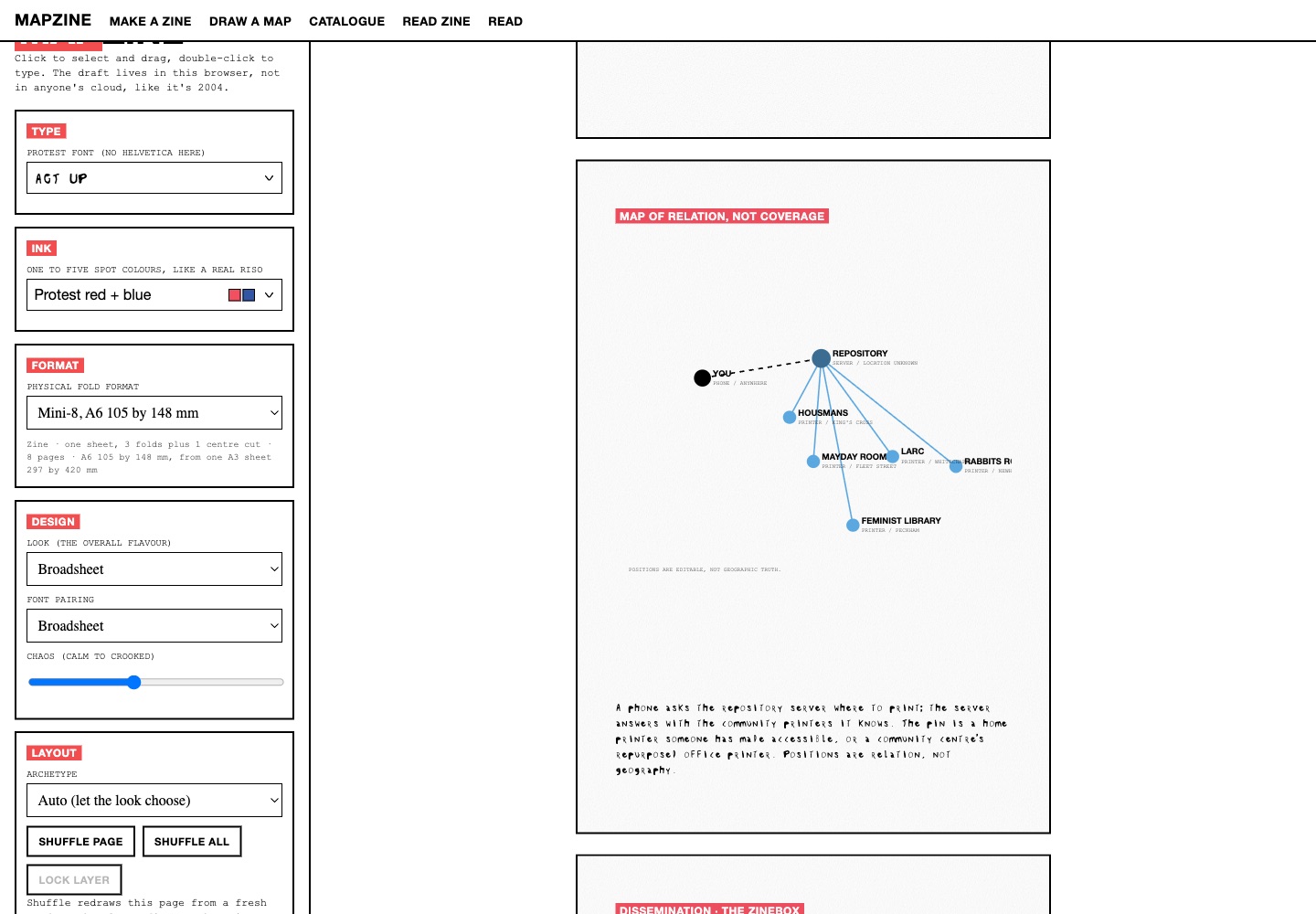
A browser tool for making zines: write the text, drop in images and a community map, pick a protest typeface, and print an A4 sheet that folds into a zine. No account, no cloud, no tracking. The fold imposition and the decolonial projections are conceptual decisions as much as technical ones: the geometry of the folded sheet and the frame of the map both carry the argument. Made within the Disturbing Code collective context, it is one half of a larger idea, a non-corporate, localised internet made of paper, where community printers and zine boxes are the network.
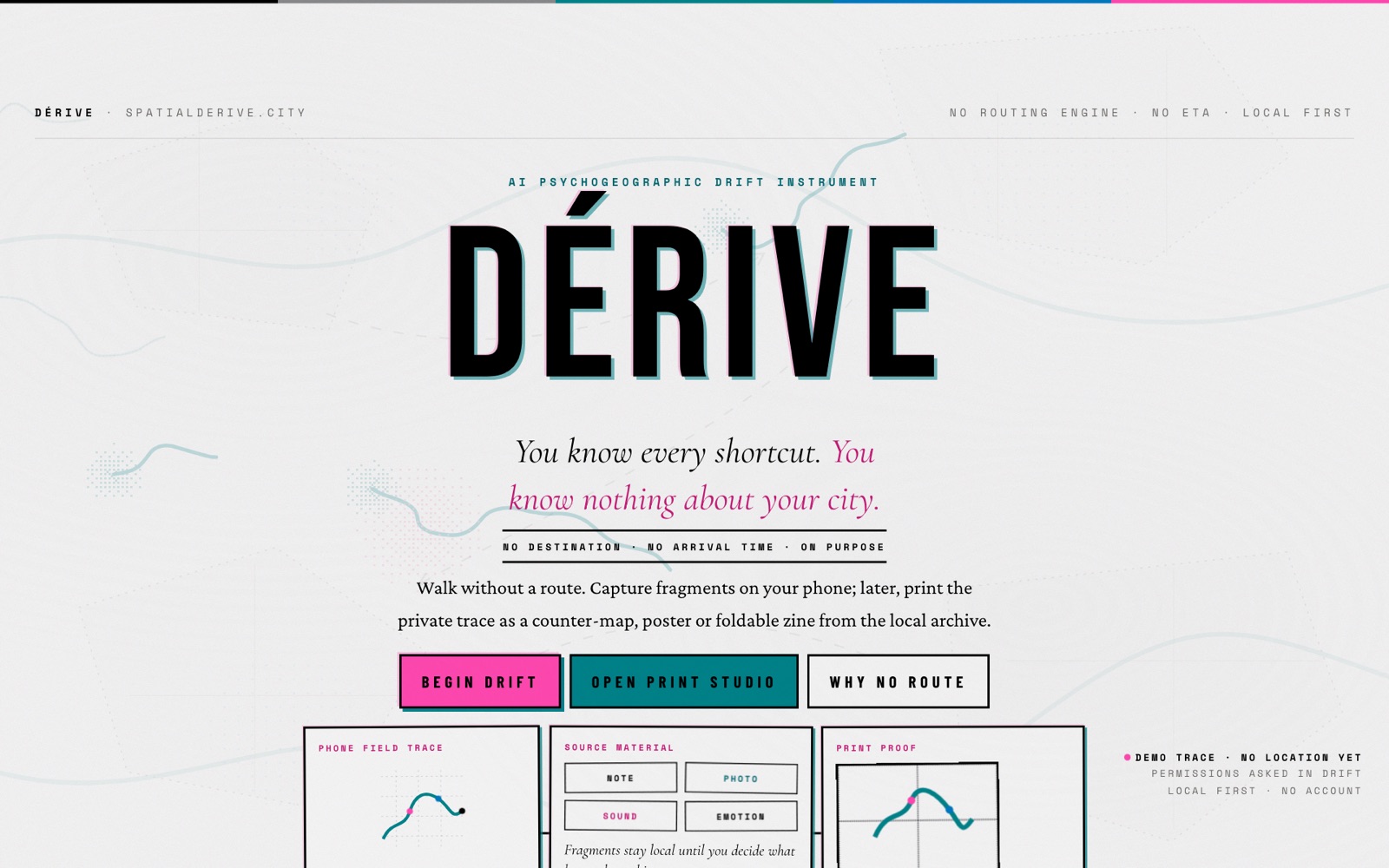
A walking instrument that makes the phone already in your pocket a way to record the street's sensory texture, the layer satellites and administrative data leave out, by deepening attention rather than optimising a route. The walk itself is the interface: a location-aware narrator observes and questions rather than instructs, a generative soundscape and acoustic classifier listen with the walker, and a drift leaves the screen as a printed object through riso-style zines, fold-imposed booklets and countermaps. Everything is local-first, with consent treated as a feature rather than friction.
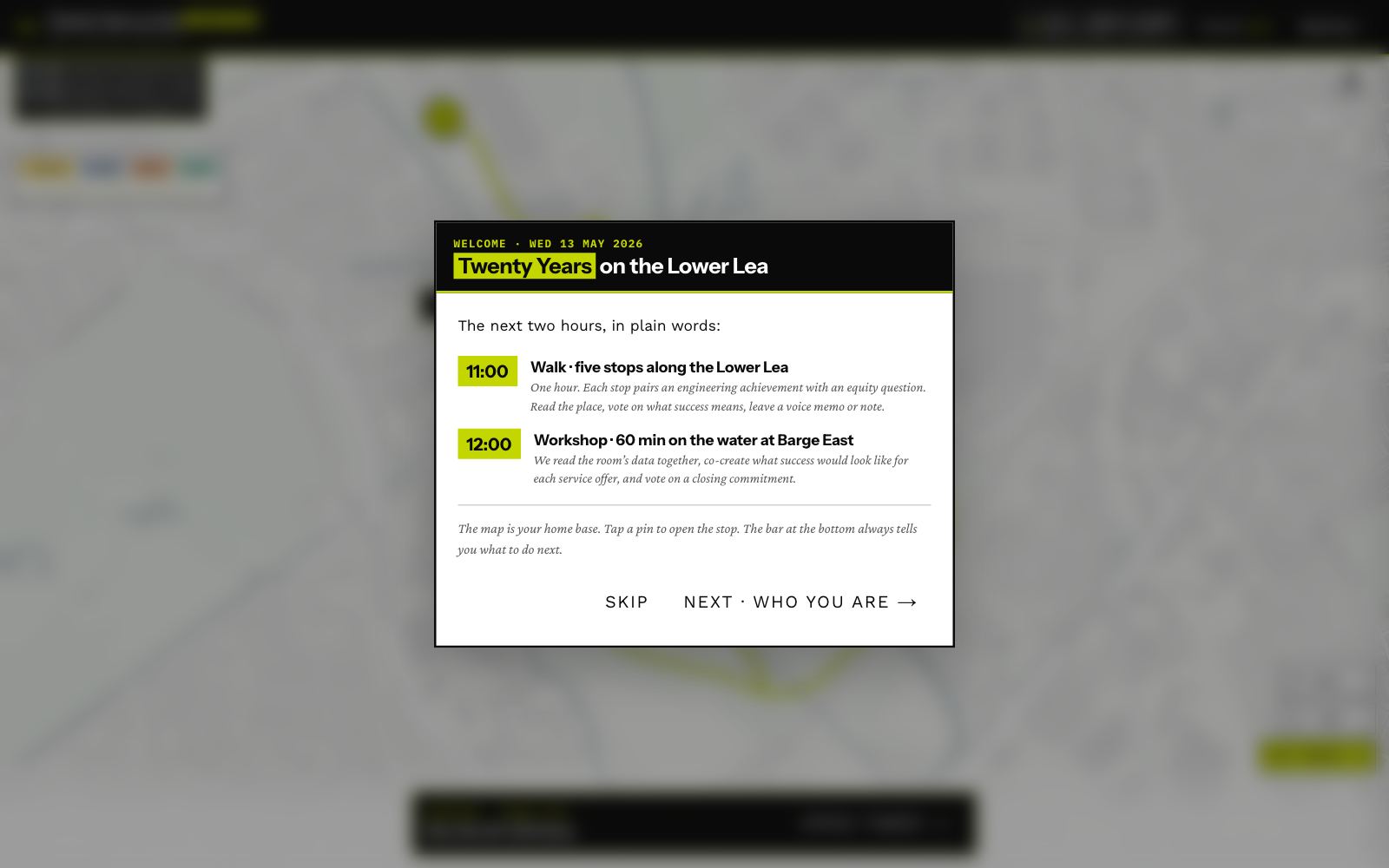
A two-hour walking workshop, commissioned by a leading built-environment engineering practice, that reads twenty years of Olympic Park regeneration critically, on foot, with the commissioner's own team. Every phone becomes a voting booth: a single Success, Tension, Synergies poll fires on arrival at each of five stops, so the walk populates the workshop and the room opens on live data. Each engineering achievement is paired with an equity counter-reading grounded in named sources, and the typography holds the two voices apart, unbridged, because resolving the tension is the workshop's job, not the document's.
Civic evidence as a public art of accountability: fragmented official data on England's long-term empty homes, reconciled into 296 comparable councils and a Lewisham building map anyone can investigate. Built with the London Renters Union, it turns scattered council-tax tables, census releases and administrative geographies into one legible national pattern, with every figure carrying its provenance and its limits stated in public; the derived national total differed from the leading independent count by 42 homes, or 0.014 per cent. The work is deliberately aggregated, so it enables council action rather than becoming a doxxing tool.
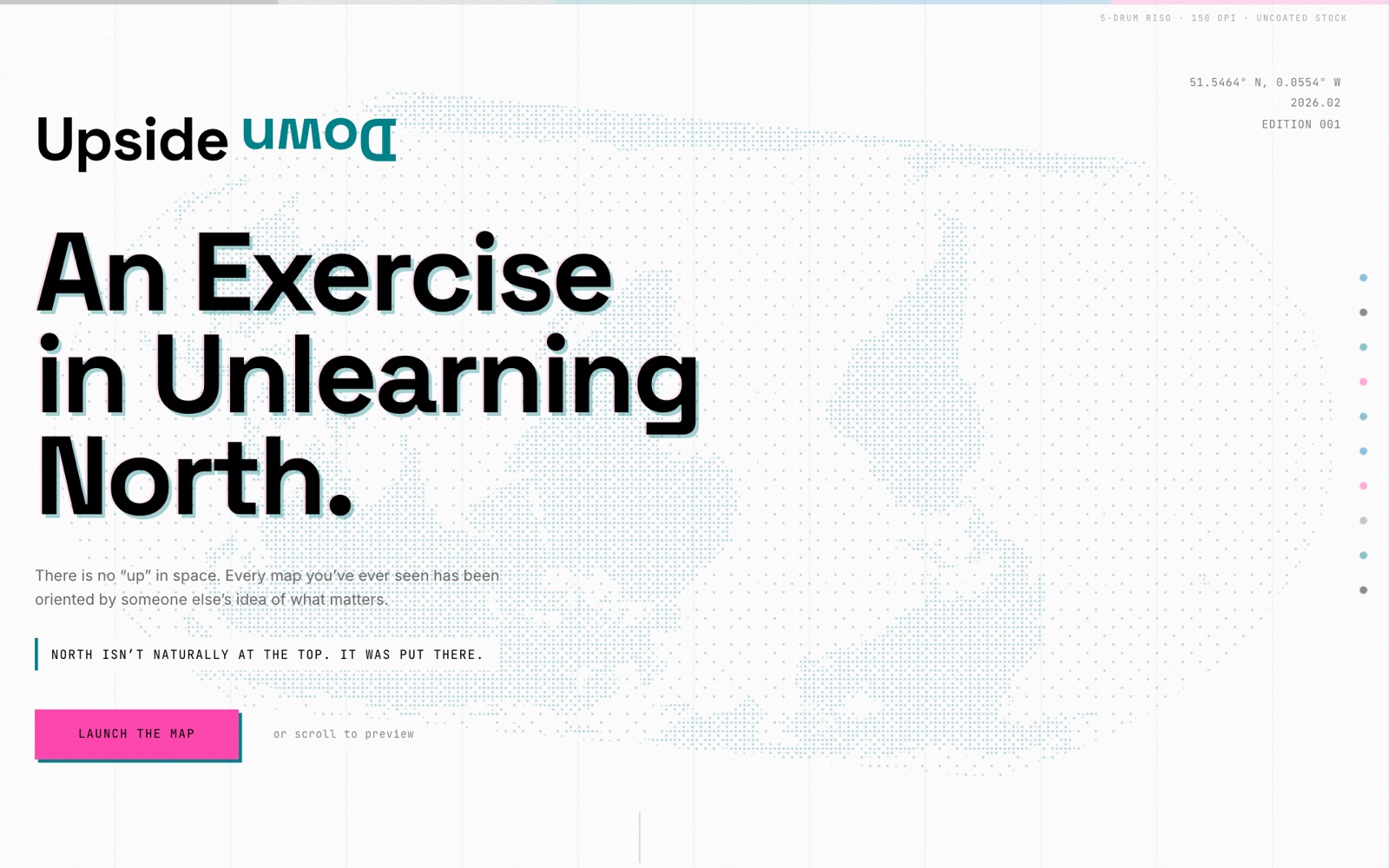
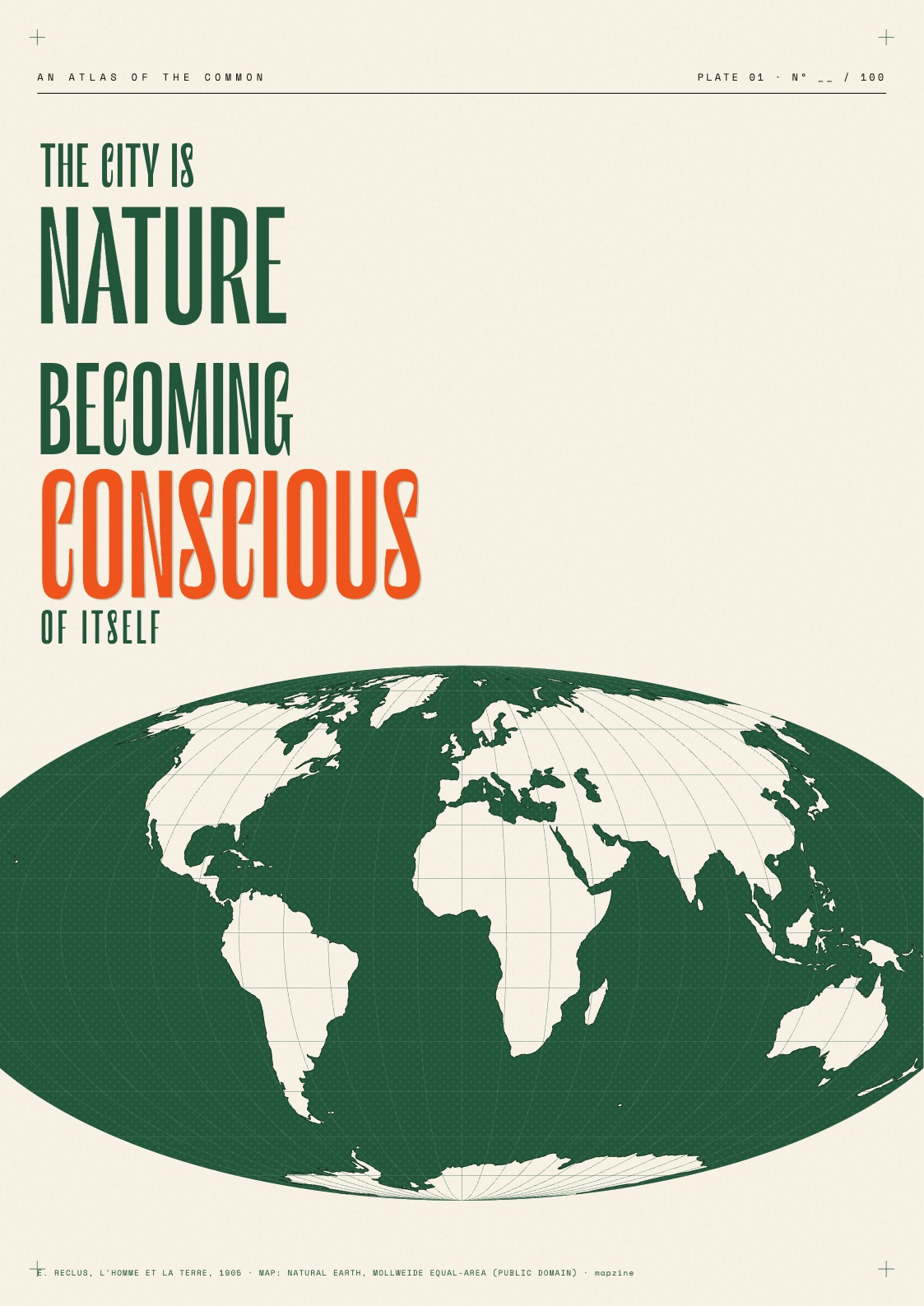
A live re-projection that turns the 1569 Mercator worldview against itself: flip the planet south-up and its familiar neutrality falls away, exposing north-on-top as a five-hundred-year-old choice rather than a fact. The argument is made by the hand, not the caption; anyone can grab the globe, reorient it and export a free, unwatermarked poster, which is the growth engine and the politics at once, because the critique travels precisely because it is given away. It is a warm provocation about orientation, not a proposal to standardise a south-up world.
Print plates
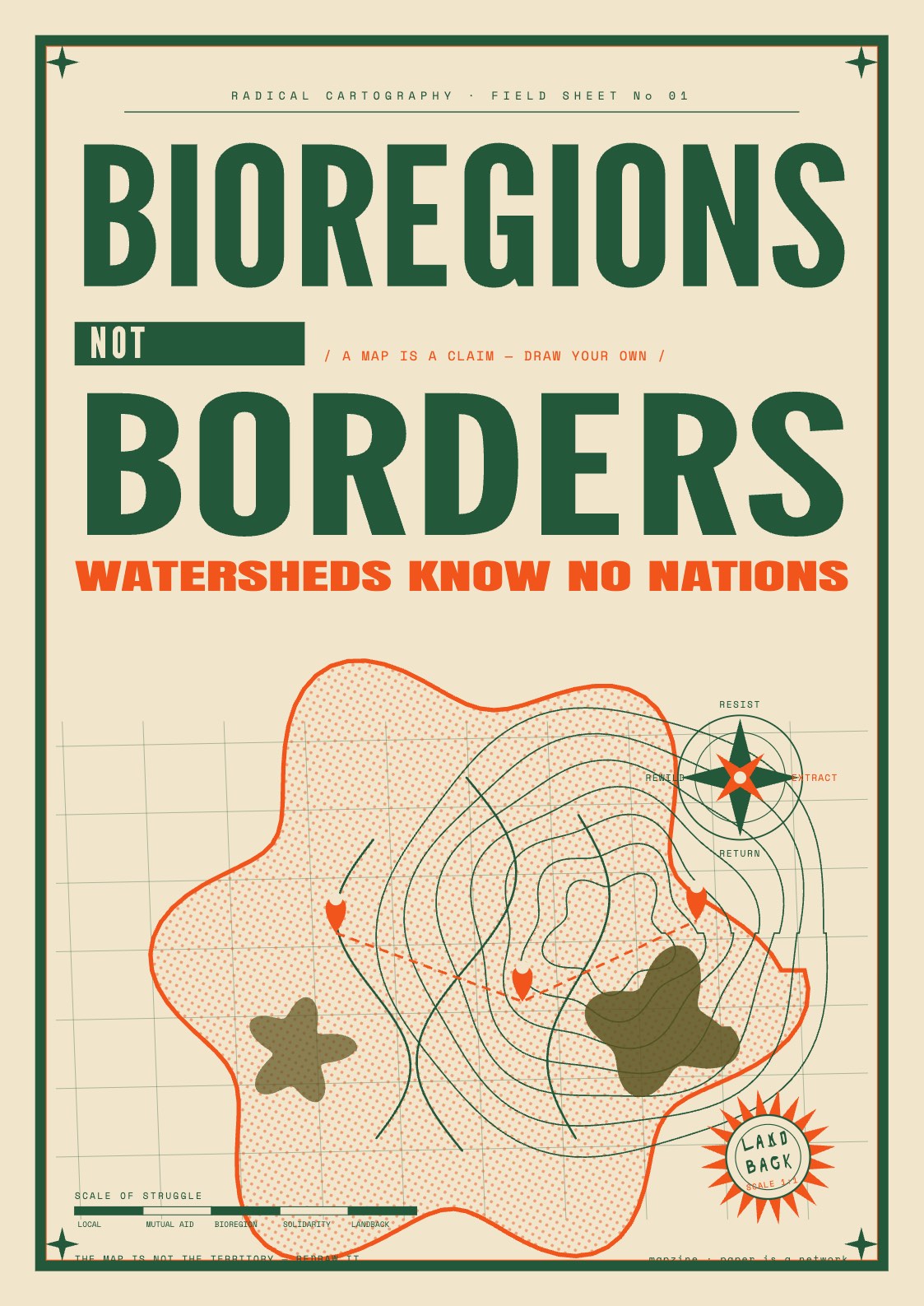
Bioregions Not Borders
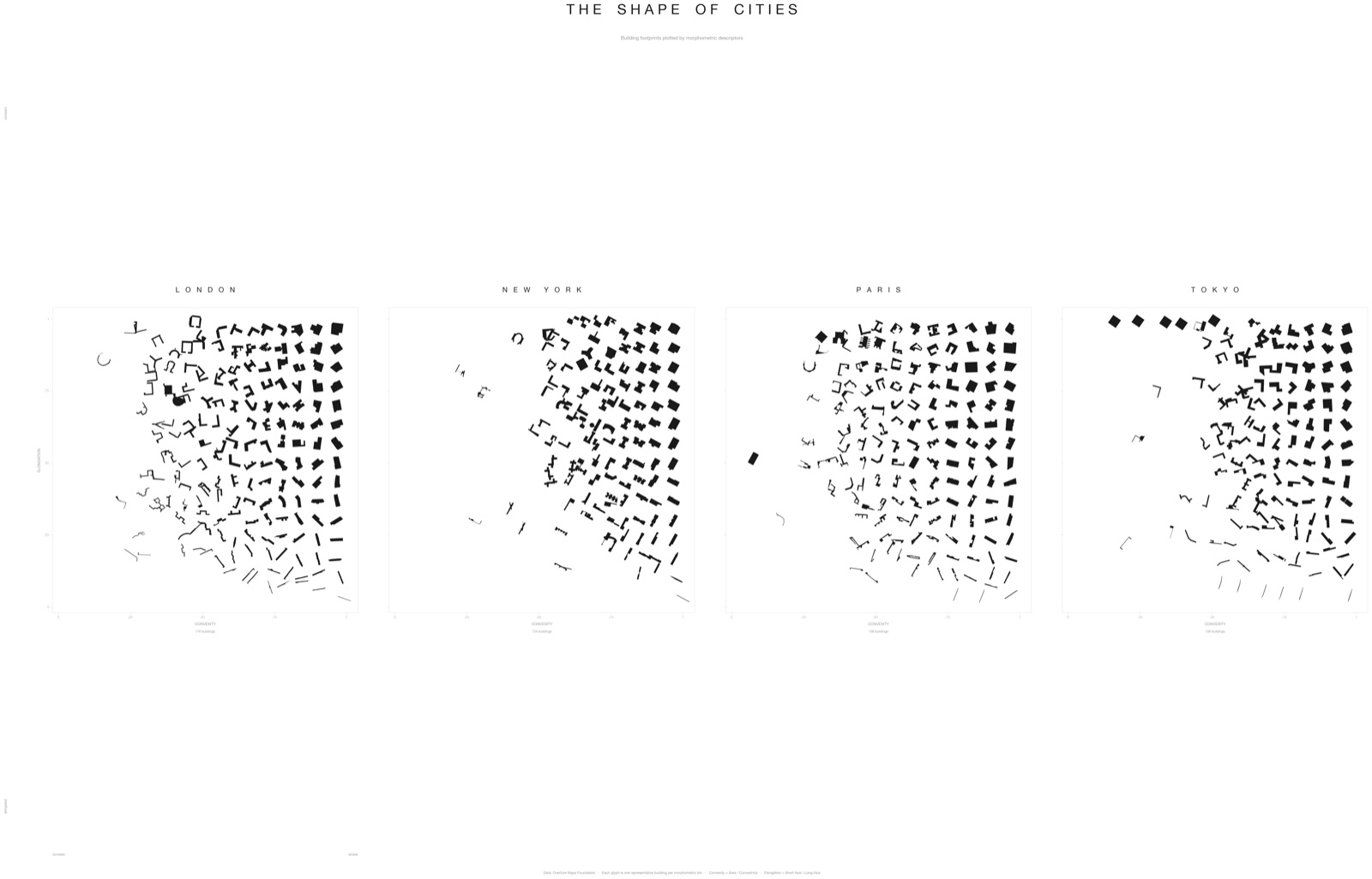
The Shape of Cities
The Overplate